


Products
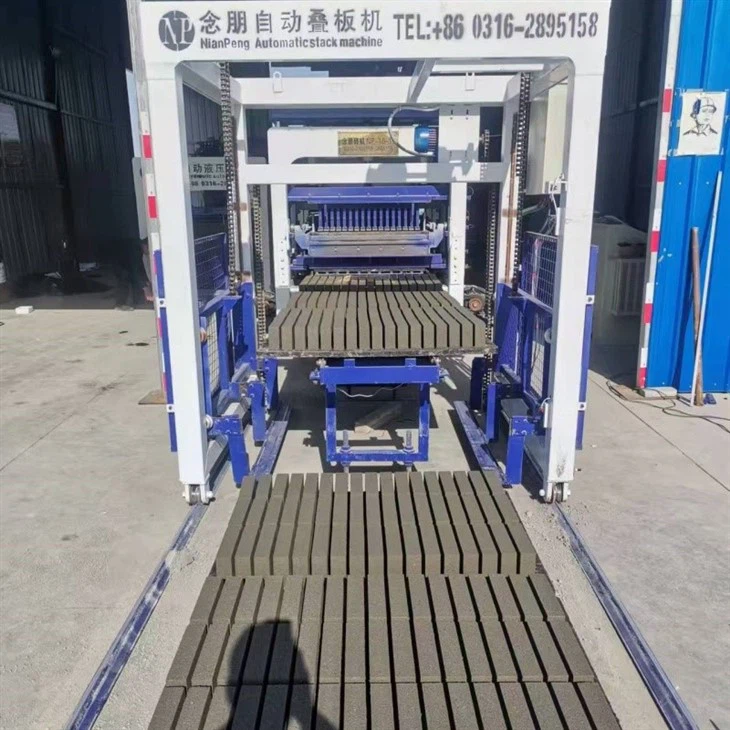
Fully Automatic Hollow Cement Brick Equipment
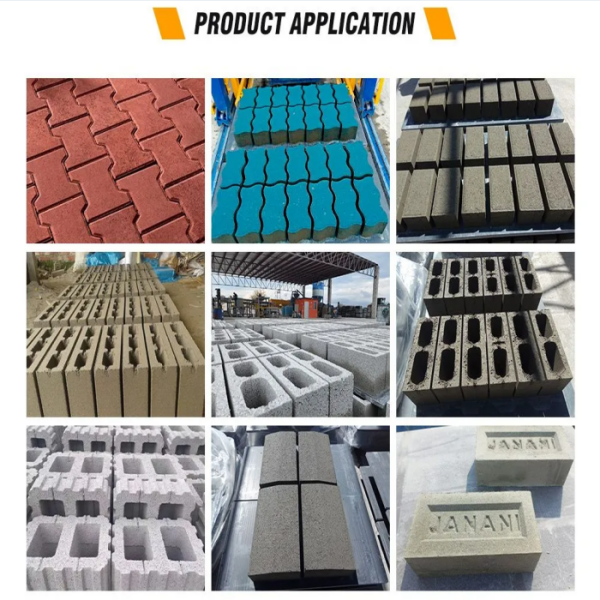
block making machine is latest developed equipment product, which is a special-purpose equipment for making building block making machine. The material of this machine can be flyash, slag, gangue or the others industrial waste, river sand, gravel, cement etc. Makes different sizes of hollow blocks, porous blocks, curbstone, pavement blocks, grass blocks, slope-protecting blocks, ring-tree blocks etc. If add color machine, it can make layering blocks.
Features
Langfang Nianpeng Mechanical Equipment Processing Co., Ltd. is one of the most reliable manufacturers and suppliers of fully automatic hollow cement brick equipment in China. If you're going to buy high quality fully automatic hollow cement brick equipment, welcome to get pricelist and quotation from our factory. For price consultation, contact us.
Basic Info.
| Model NO. | QT12-15 | Customized | Customized |
| Automatic Grade | Automatic | Type | Vibration Molding |
| Hydraulic Pressure | 21MPa | Main Vibration | Platform Vibration |
| Cycle Time | 15-25 Seconds | Freqyency | 2800-4500r/M |
| Total Power | 70.5kw | Pallet Size | 1350X900mm |
| Weight | 11500kg | Productivity 8′ Block | 2160-2880PCS/Hour |
| Productivity Paver | 3800-4800PCS/Hour | Plant Area | 2500 Square Mrters |
| Transport Package | Container or Wooden Box | Specification | 9350x2520x2950mm |
| Trademark | HF | Origin | China |
| HS Code | 8474809090 | Production Capacity | 50sets/Month |
Product Description
QT12-15 Fully Automatic Concrete Cement Brick Hollow Block Making Machine
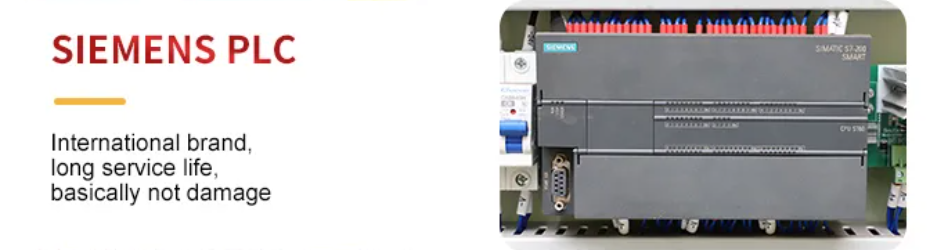
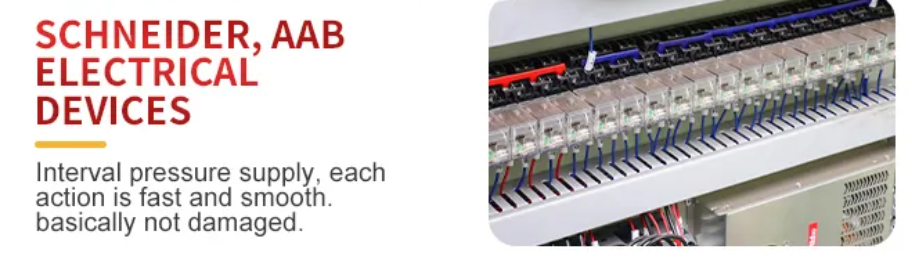
Siemens brand PLC control system / Siemens motor / Omron switch/ International standard steel

How to optimize the production efficiency of hollow cement brick equipment?
Optimizing the production efficiency of hollow cement brick equipment requires starting from multiple dimensions such as equipment performance, process parameters, raw material management, operation and maintenance, and intelligent upgrades to form a systematic solution. The following are specific optimization strategies and implementation points:
I. Equipment hardware upgrade and maintenance
1. Improvement of core component performance
Hydraulic system transformation
Replace with a high-pressure, low-energy servo hydraulic system to increase the pressing speed (such as shortening the pressing cycle from 15 seconds/block to 10 seconds/block), and monitor in real time through pressure sensors to avoid waste caused by overpressure or underpressure.
Example: A company upgraded the traditional gear pump to a servo motor-driven plunger pump, reducing energy consumption by 30% and increasing production efficiency by 25%.
Vibration system optimization
Use variable frequency vibration motors to dynamically adjust the vibration frequency according to the characteristics of the raw materials (such as upgrading from a fixed 30Hz to an adjustable 10-50Hz), matching the compaction requirements of different brick types, and reducing the air vibration time.
2. Automatic feeding and demoulding upgrade
Intelligent feeding system
Add weight sensors and PLC control systems to achieve automatic calibration of feeding volume (error ≤ ±1%), avoiding under- or over-filling caused by manual adjustment.
Example: Screw feeder + laser rangefinder combination, real-time monitoring of hopper height and automatic refilling, reducing downtime waiting time.
Innovative mold design
Adopting a quick-change mold structure (such as hydraulic clamping or dovetail slot buckle) to shorten the mold change time from 2 hours to 30 minutes; the mold material is upgraded to carbide or surface coating treatment (such as nitriding treatment), the life is extended by 5-8 times, and the frequency of downtime and mold change is reduced.
3. Fault warning and maintenance system
Install vibration monitoring, temperature sensors and oil contamination detectors to provide real-time warning of component wear (such as abnormal bearing temperature rise, hydraulic oil impurities exceeding the standard), convert passive maintenance to preventive maintenance, and reduce sudden downtime (target: annual downtime is reduced to less than 50 hours).
2. Precise control of raw materials and process parameters
1. Standardized management of raw materials
Graded storage and precise proportioning of aggregates
Sand and stone chips are stored in separate bins according to particle size (such as 0-2mm, 2-5mm, 5-10mm), and the grading error is ≤±2% through the combination of belt scale + loss-in-weight scale.
Example: Introduce a crushing and screening machine to process aggregates on site to avoid process adjustments caused by fluctuations in the particle size of purchased aggregates.
Intelligent control of moisture content
Install an online microwave moisture meter to detect the moisture content of the mixed material in real time, and automatically replenish water with the solenoid valve of the water supply pipeline (response time <5 seconds), so as to control the moisture content fluctuation within ±0.5%.
2. Establishment of process parameter database
For different brick types (such as standard bricks, porous bricks, and load-bearing bricks), the orthogonal test method is used to optimize the pressing pressure (80-150 tons), vibration time (8-15 seconds), and holding time (3-8 seconds) to form a standardized process card, which can be called by operators with one click to reduce trial and error time.
Case: After optimizing the parameters of 190×190×390mm hollow bricks, the single-shift output of a production line increased from 8,000 to 11,000, and the scrap rate dropped from 5% to 1.5%.
III. Intelligent and information transformation
1. Full process automation of the production line
Unmanned linkage control
Through the industrial Internet of Things (IoT), the feeding, mixing, pressing, stacking, and maintenance links are linked. For example, after the pressing is completed, the robot automatically grabs the bricks to the conveyor belt and triggers the opening of the maintenance kiln door simultaneously, reducing the number of manual intervention nodes (target: reducing the number of operators from 8 to 3).
Visual inspection and quality traceability
Install high-speed industrial cameras to conduct online inspections of brick size, surface cracks, hole locations, etc. (inspection speed ≥ 20 blocks/second). Defective products are automatically removed by the robotic arm. At the same time, the system records bad data and traces it back to the raw material batch or equipment parameter abnormality point.
2. Visual management of production data
Deploy MES (manufacturing execution system) to monitor equipment OEE (overall efficiency), capacity utilization, energy consumption data, etc. in real time. For example, when the pressing efficiency in a certain period is lower than the set value (such as <50 blocks/hour), the system automatically warns and prompts to check the feeding or mold problems.
Example: A company found through the data dashboard that the failure rate of the vibrator accounted for 40%. After strengthening the management of the bearing lubrication cycle in a targeted manner, OEE increased from 65% to 82%.
4. Personnel efficiency and management optimization
1. Standardized training of operating skills
Compile the "Equipment Operation SOP Manual", covering parameter settings, mold change process, common fault troubleshooting (such as emergency treatment of hydraulic system oil leakage), improve practical proficiency through VR simulation training, and shorten the training cycle for new employees from 1 month to 2 weeks.
2. Dynamic balance of production rhythm
Use "Value Stream Mapping (VSM)" to analyze bottleneck links. For example, if the palletizing speed is 12 blocks/minute and the pressing speed is 15 blocks/minute, you can add a buffer roller or upgrade the palletizing robot (the grasping speed is increased to 18 blocks/minute) to eliminate waiting waste between processes.
3. Performance incentives and continuous improvement
Establish a piece-rate wage system linked to OEE to encourage teams to optimize equipment efficiency; set up an "Improvement Proposal Award" to reward suggestions for improving efficiency (such as mold rapid positioning devices) to form a continuous improvement culture with full participation.
V. Supporting facilities and environmental optimization
1. Plant layout and logistics upgrade
Use the "U-shaped production line" layout to shorten the raw material transportation distance (such as moving the sand bin to within 5 meters of the mixing equipment); set up an intelligent stereoscopic warehouse in the finished product area, and automatically transfer through the AGV cart to reduce the time consumed by the forklift.
2. Energy and environmental protection
Install an oil temperature cooling device (such as a plate heat exchanger) to control the hydraulic oil temperature in the appropriate range of 35-50℃ to avoid equipment slowdown caused by high temperatures in summer; use an electric heating rod to preheat the oil tank in winter, and the start-up preparation time is shortened from 40 minutes to 15 minutes.
Note: The specific data varies depending on the equipment model and production scale. It is recommended to verify the effect through local pilot projects (such as the transformation of a single production line) before full promotion.
Summary
The efficiency optimization of cement hollow brick equipment needs to focus on "equipment automation, process standardization, and management informatization". Physical bottlenecks should be solved through hardware upgrades, process stability should be improved through parameter optimization, and full-process collaboration should be achieved through intelligent systems, while supplemented by personnel skill improvement and management mechanism innovation. The ultimate goal is to maximize production capacity (such as increasing shift production by 30-50%), minimize energy consumption (reducing energy consumption per unit product by more than 20%), and optimize labor costs (reducing staff by 40-60%) while ensuring product quality, thereby comprehensively improving the company's competitiveness.

| Main Technical Specifications | ||
| Overall Dimension | 9350x2520x2950mm | |
| Rated pressure |
|
|
| Main vibration form |
|
|
| Cycle Time |
|
|
| Vibrating Frequency | 2800-4500 rolls/minute | |
| Motors Power | 63.5 KW | |
| Pallet Size | 1350x900mm | |
| Raw Materials |
|
|
| Applied Products |
|
|
| Applied Fields | widely used in buildings, road pavings, squares, gardens, landscaping, city constructions, etc. | |





Q: Are you a famous brand in block machine industry?
A: Yes,we are top 3 supplier in China.
Q: What can you do if i am not falilar with the machine operationand maintaince?
A: we have engineer who can help you from locally and online 24hours.
Q: Why your price is higher than others?
A: Because our machine quality is more stable and longger lifespan,the block quality is also better.
Q: How can choose a suitable block machine supplier from Aliba-ba?
A: There are many supplier not be trusted,because quality notgood. hebei NP Machine Co.,Ltd is a famous brand and a stockcompany,with us,your business will be in safe forever.
Hot Tags: fully automatic hollow cement brick equipment, China fully automatic hollow cement brick equipment manufacturers, suppliers, factory, BRICK MACHINE PALLET, Brick Making Equipment, Cement product production line, CLOSE LOOP PRODUCTION LINE, Concrete Batching Plant, Pressure Brick Machine
You Might Also Like


Send Inquiry
